
The Art of Showing Up by Not Showing Up
The algorithm wants you everywhere. Luxury disagrees.
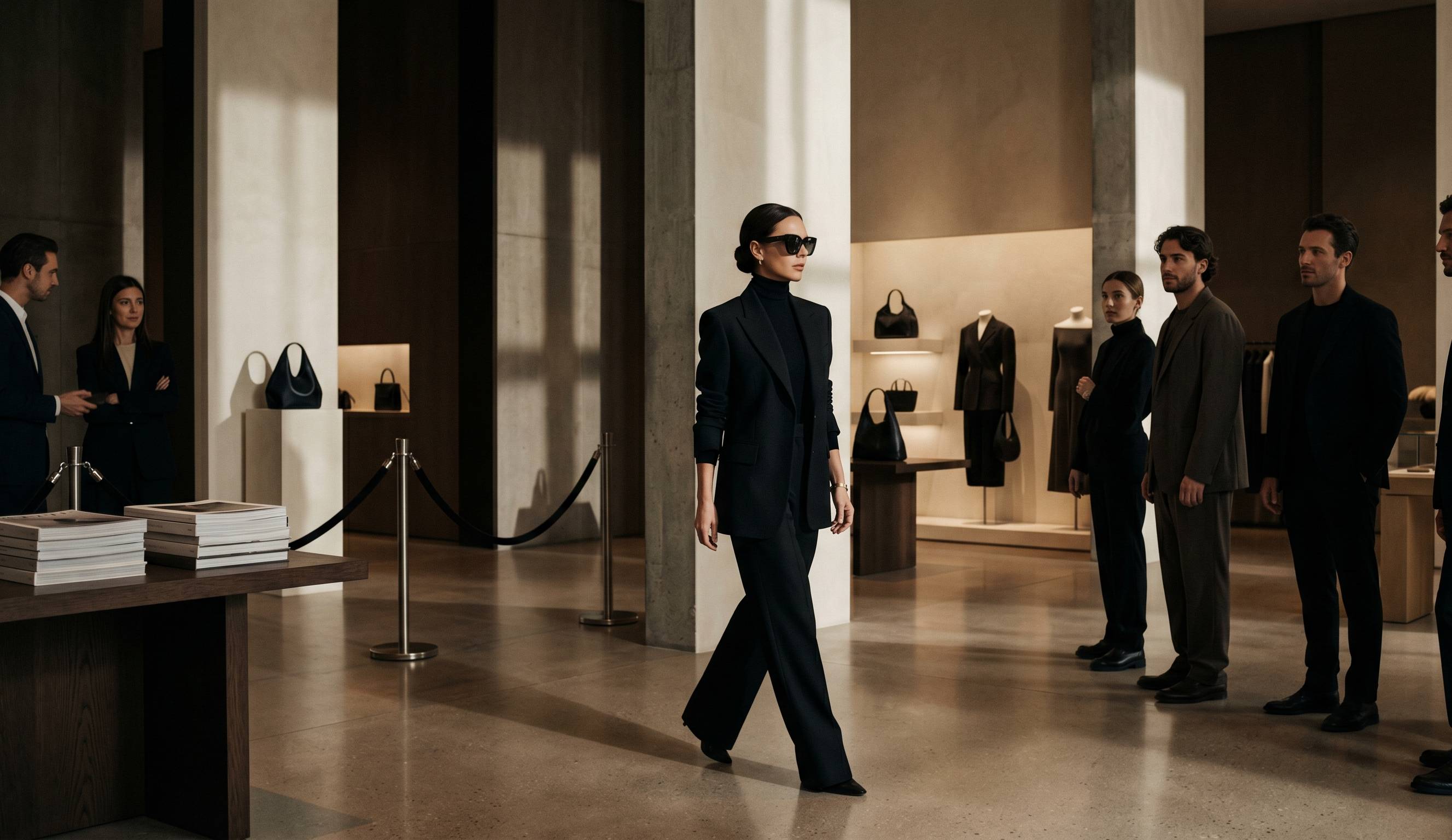
Miranda Priestly never announced herself. No countdown. No teaser post. No "something big is coming" graphic made in a panic on Canva. She simply walked in, dropped her coat, and the entire room restructured itself around her presence.
Nobody at Runway was asking Miranda to post more. Nobody needed her to go "Live" to feel her impact. The silence was the power. The unavailability was the product. (Imagine asking Miranda to do a "Day in the Life" vlog. The sheer trauma. Just no.)
Yet here we are in 2026, watching brands frantically post three times a day, chasing an algorithm that will change by Thursday, wondering why nothing feels exclusive anymore.
The Question Keeping the Industry Awake
Does a brand actually need to be loud and everywhere to be relevant? Or is there a completely different kind of power that most brands are too busy posting to notice?
Spoiler: there is and the brands who've cracked it are playing a cooler game. One where the velvet rope is not a metaphor; it's a lifestyle. (Not everyone gets an invite. That's the whole point.)
The most sought after luxury brands understand that desire lives in two places: in a store so considerate you straighten your posture when you walk through the door, and in a digital presence so intentional that a single image stops a scroll cold.
Exhibit A: The Row. No logo flashing. No trend chasing. No explaining the vision, ever. Just an obsessive commitment to fabric and construction. The Olsen twins, Mary-Kate and Ashley, built one of the most coveted fashion houses in the world by deciding what they wouldn't do just as carefully as what they would. The internet didn't give them that. The product did.
Exhibit B: Valextra. The Milan-based bag house most people outside the industry haven't heard of, which is entirely by design. People feel like insiders just for knowing it exists. High ceilings. Almost nothing on the walls except bags displayed like museum pieces. There are waitlists of months. There are regulars who've been customers for decades. There is zero noise. (This is what happens when the product is so good the store itself becomes the campaign.)
The question isn't being either online or offline. It's whether everything you put into the world is adding up to something substantial or not. Building a world with its own rules, its own aesthetic and its own gravity.
Availability Is the Enemy of Desire
Here is something the luxury world has always known and the digital world keeps trying to unlearn: if you are everywhere, you are for everyone.
And “for everyone” is just a polished way of saying “for no one in particular.” (The fashion equivalent of a participation trophy. Groundbreaking.)
Think about Hermès. No flashy sale banners. No countdown timers. No “only 3 left!” notifications engineered to spike your cortisol. The brand doesn’t chase. It simply exists with the confidence of something that has been right about itself since 1837.
And yet, there are waitlists. Years-long, borderline mythological waitlists.
(Revolutionary concept: being so good that people actually wait. Voluntarily. In this economy. Imagine.)
Bottega Veneta deleted its Instagram in 2021 and somehow became more talked about. Loro Piana built an entire religion around its fabric and barely whispers about it. The pattern is physics: too much availability devalues. (Newton’s Fourth Law: The more you post, the less they care. Science.)
But Here’s Where Everyone Gets It Wrong
Going quiet is not the strategy. It is the result of one. (Don't just delete your app and expect a Birkin-level waitlist to appear overnight.)
The Row can afford its mystery because the product is speaking at a volume most brands will never reach. Maison Margiela can be cryptic because decades of cultural credibility do the heavy lifting before a single image even loads.
These brands aren't quiet because they’re lazy. They’re quiet because they’ve built worlds and realized that other people carry the conversation forward in editorials, in stylist recommendations, and in that specific pause at a dinner table when someone mentions the brand and the room goes still.
That pause? That’s the metric. No follower count. The lean-in.
Trading Legacy for Likes
The internet has decided "The Personal Brand" is mandatory. Story updates. "Behind the scenes" energy. It slowly turns designers into influencers and brands into "content" rather than "couture."
(Trading legacy for likes is a tale as old as the algorithm and twice as tragic. Cringe.)
When the designer steps back, the brand must already be at the front.
The storytelling has to be twice as strong. The visual world has to be so specific that it communicates without a human face carrying it. It’s harder to build. It takes longer. But the brands that get there don't just hold their edge. They sharpen it. (And they do it without a single "link in bio" sticker. Absolute flex.)
The Final Verdict: Silence is Earned
Staying off social media and staying out of the conversation are two different things.
A designer can be low-key and still have a brand that is relentlessly, strategically present through editorial placements and word-of-mouth that functions like an unlimited ad budget.
(The most expensive-feeling strategy is often the one that looks like it costs nothing.)
Build the world first. Make it so complete that people are actively looking for the invitation. Then, and only then, does saying less become the loudest thing in the room.
Silence is a luxury. But like all actual luxuries, it has to be earned. (And no, buying followers doesn't count as 'earning' it. Your bot farm is showing. Delete it.)
At Code to Couture, building that world is precisely what we do. Knowing when to speak and when to let the brand do the talking is a skill. Turns out, it’s our favorite one.
(And we promise to do it without making you film a "Get Ready With Me." You’re welcome.)